
Cats are naturally clean animals, but they still need regular grooming support from their owners.
Brushing, coat checks, nail trimming and occasional professional grooming can help keep your cat
clean, comfortable and easier to manage.
For pet owners in Dubai, regular grooming is especially important because dust, sand, warm weather
and indoor air conditioning can affect the condition of a cat’s coat. Long-haired cats may develop
tangles more quickly, while short-haired cats can still experience shedding and loose hair buildup.
The best grooming routine depends on your cat’s coat length, shedding level, lifestyle and comfort
with being handled.
These essential cat grooming tips for Dubai pet owners will help you create a practical routine and
recognise when professional grooming may be useful.
Need support maintaining your cat’s coat? Contact Fluffies to request a professional
cat grooming appointment in Dubai.
Why Cat Grooming Is Important in Dubai
Regular grooming is not only about appearance. It helps remove loose hair, reduce tangles and keep
the coat clean and manageable.
Dubai’s environment can make consistent coat maintenance particularly useful.
Dust and Sand Can Settle in the Coat
Fine dust and sand can collect in a cat’s fur, especially when the cat spends time on a balcony, in a
garden or near open doors and windows.
Long-haired coats can trap more debris around the legs, chest, tail and underside of the body.
Regular brushing helps remove surface dirt before it becomes harder to manage.
Indoor Cats Still Need Grooming
Indoor cats may not become visibly dirty, but they still shed hair and can develop tangles.
Air-conditioned indoor environments can also contribute to dry-feeling coats in some cats. A regular
brushing routine distributes natural coat oils and removes loose hair.
Long-Haired Cats Can Develop Mats
Cats with long, thick or soft coats are more likely to develop knots. Common problem areas include
behind the ears, under the legs, around the neck and near the tail.
Small knots can become tight mats when they are not removed early. Consistent brushing makes the
coat easier to maintain and reduces the need for more intensive grooming later.
How Often Should You Groom Your Cat in Dubai?
The ideal grooming frequency depends mainly on coat type.
A practical starting schedule is:
● Short-haired cats: brush once or twice a week
● Medium-haired cats: brush two to three times a week
● Long-haired cats: brush daily or every other day
● Heavy-shedding cats: brush more frequently during shedding periods
● Cats prone to tangles: check the coat every day
Professional grooming may be scheduled every four to eight weeks for cats that need regular coat
maintenance. Some long-haired cats may benefit from more frequent appointments, while
well-maintained short-haired cats may need professional grooming less often.
The correct schedule should be based on the individual cat rather than a fixed rule.
1. Brush Your Cat Regularly
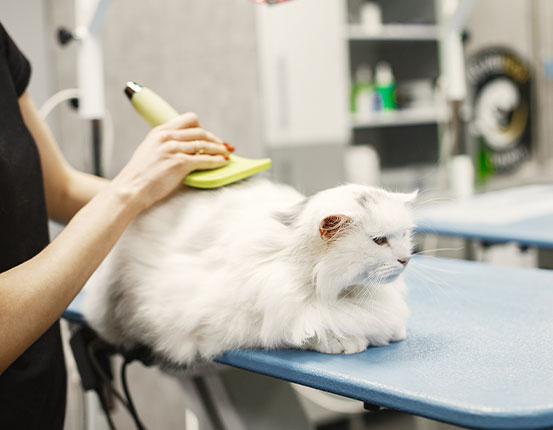
Brushing is one of the most important parts of a cat grooming routine.
It removes loose hair, helps prevent tangles and keeps the coat looking neat. It can also reduce the
amount of shed hair left on furniture, carpets and clothing.
Brushing Short-Haired Cats
Short-haired cats usually need brushing once or twice a week.
Use gentle strokes in the direction of hair growth. Focus on the back, sides and chest, while being
careful around sensitive areas such as the stomach and legs.
Even short coats can hold loose hair, so regular brushing remains useful.
Brushing Long-Haired Cats
Long-haired cats may need daily brushing.
Begin with areas that are less sensitive, such as the back and shoulders. Gradually work towards
areas where tangles often form, including:
● Behind the ears
● Under the front legs
● Around the collar area
● Along the chest
● Around the tail
● Near the back legs
Do not pull tightly at knots. If a tangle is close to the skin or difficult to remove, professional grooming
is usually safer than trying to cut it out at home.
2. Start Grooming Slowly
Many cats need time to become comfortable with grooming.
Start with short sessions lasting one or two minutes. Allow your cat to see and smell the brush before
using it.
Brush a small area, then stop before the cat becomes restless. Short, calm sessions are more
effective than forcing a cat through a long grooming routine.
You can gradually increase the grooming time as the cat becomes more comfortable.
Consistency is important. Grooming once a week at a predictable time can help the routine feel more
familiar.
3. Check the Coat for Tangles and Mats
A quick coat check can prevent minor tangles from becoming larger mats.
Run your fingers gently through the coat and look for areas that feel thick, knotted or uneven.
Pay particular attention to:
● Behind the ears
● Under the legs
● Around the neck
● Under the chest
● Near the tail
● Around the lower stomach
Mats can sit close to the skin and may not always be obvious from the surface.
Never use scissors near a cat’s skin to remove a mat. Cat skin can be thin and may become pulled
into the knot. A professional groomer can assess the coat and choose a safer removal method.
4. Keep Your Cat’s Nails Trimmed
Regular nail trimming helps prevent nails from becoming excessively long or catching on fabric and
furniture.
Many cats need nail trimming approximately every two to four weeks, although the frequency varies.
Use nail clippers designed for pets and trim only the clear tip of the nail. Avoid cutting into the pink
area inside the nail.
When your cat is not comfortable with nail trimming, start by gently handling the paws for a few
seconds at a time. This can help the cat become more familiar with the sensation.
Professional groomers can also include nail trimming as part of a grooming appointment.
5. Be Careful When Bathing Your Cat
Most cats do not need frequent bathing. Regular brushing is often enough to maintain the coat
between professional grooming appointments.
Bathing may be useful when the coat becomes particularly dusty, oily or difficult to clean through
brushing alone.
When bathing a cat:
● Use a shampoo suitable for cats
● Use lukewarm water
● Keep the session calm and brief
● Avoid getting water directly into the ears or face
● Rinse the coat thoroughly
● Dry the cat carefully in a warm, comfortable environment
Never use shampoo made for humans or products not intended for cats.
Some cats become highly stressed during bathing. In these cases, professional grooming may be a
more practical option.
Book professional cat grooming with Fluffies for careful coat cleaning, brushing and
grooming support across Dubai, Sharjah and Ajman.
6. Maintain the Coat During Dubai’s Warmer Months
Cats may shed more at certain times of the year, even when they live mainly indoors.
Regular brushing during warmer periods helps remove loose hair before it accumulates in the coat or
around the home.
Long-haired cats may also benefit from a more manageable coat style, depending on the coat
condition and the owner’s maintenance routine.
However, shaving a cat very short is not always necessary. The appropriate grooming approach
depends on the cat’s coat type, current condition and tolerance for grooming.
A professional groomer can recommend a practical solution without removing more coat than needed.
7. Keep Grooming Tools Clean
Brushes, combs and nail clippers should be cleaned regularly.
Remove trapped hair from grooming tools after each use. Wash suitable tools when needed and allow
them to dry completely before storing them.
Clean grooming tools are easier to use and help prevent dirt and old coat debris from being
transferred back onto the cat.
Each cat should ideally have its own regularly cleaned grooming tools.
8. Use the Right Grooming Tools
Different coat types require different tools.
Short-haired cats may benefit from a soft brush or grooming mitt. Medium-haired and long-haired cats
may require a combination of a wide-toothed comb and a suitable brush.
The wrong tool can pull the coat or irritate the cat.
A basic cat grooming kit may include:
● A soft brush
● A wide-toothed comb
● A fine comb for smaller areas
● Pet nail clippers
● A clean towel
● Cat-safe shampoo when bathing is required
Choose tools according to your cat’s coat type rather than purchasing the strongest de-shedding tool
available.
9. Monitor Your Cat’s Behaviour During Grooming
Your cat’s behaviour can tell you when the grooming session should stop.
Signs of discomfort may include:
● Tail flicking
● Flattened ears
● Growling or hissing
● Attempting to move away
● Sudden biting or scratching
● Rapid body movements
● Increased restlessness
Pause the grooming session when your cat becomes uncomfortable.
Continuing after clear warning signs can make future grooming more difficult. Several short grooming
sessions are often more successful than one long session.
10. Make Grooming a Positive Experience
A calm environment can make grooming easier.
Choose a quiet room and avoid grooming immediately after loud activity or when the cat is already
restless.
Gentle handling, a familiar surface and a small reward after grooming can help create a more positive
association.
Try to groom your cat at a similar time and place. A predictable routine can reduce uncertainty and
make the process easier over time.
When Should You Consider Professional Cat Grooming?
Home grooming is important, but some coat conditions are difficult to manage safely without
professional support.
Consider booking professional cat grooming when:
● The coat has developed tight mats
● Your cat strongly resists brushing
● The coat is heavily shedding
● The nails are difficult to trim
● The coat feels greasy or heavily soiled
● Hair around the hygiene areas needs careful trimming
● You are unsure which tools to use
● The cat’s coat is too thick to manage at home
● You want to maintain a consistent grooming schedule
Professional groomers use suitable tools and techniques to clean, dry, brush and maintain the coat.
Booking grooming before the coat becomes heavily matted usually makes the appointment easier for
both the cat and the groomer.
Home Grooming Versus Professional Cat Grooming
Home grooming and professional grooming should work together.
Regular home brushing helps prevent knots and removes loose hair. Professional grooming provides
more thorough coat maintenance when required.
A practical routine may include:
Weekly Home Grooming
Brush the coat, check for tangles and monitor nail length.
Regular Coat Checks
Inspect the areas behind the ears, under the legs and near the tail.
Professional Grooming Appointments
Book grooming according to coat type, shedding level and the condition of the fur.
Consistent Scheduling
Do not wait until the coat becomes severely tangled. Regular maintenance is normally easier than
corrective grooming.
Common Cat Grooming Mistakes to Avoid
Even well-intentioned owners can make grooming more difficult by using the wrong approach.
Avoid these common mistakes:
Waiting Until the Coat Is Matted
Small tangles are easier to manage than tight mats. Check the coat regularly and act early.
Pulling at Knots
Pulling can make grooming painful and may cause the cat to resist future sessions.
Using Human Shampoo
Human products are not designed for a cat’s coat and should not be used.
Cutting Mats with Scissors
Cat skin can be pulled into the mat, making scissors risky.
Grooming for Too Long
Long sessions can make cats restless. Keep sessions short and stop when the cat becomes
uncomfortable.
Ignoring Short-Haired Cats
Short-haired cats still shed and benefit from regular grooming.
Cat Grooming Services Across Dubai, Sharjah and Ajman
Fluffies provides professional cat grooming services across Dubai, Sharjah and Ajman.
Dubai service areas may include Al Khawaneej, JBR, Bluewaters Island, Zabeel, Dubai Creek
Harbour, Downtown Dubai, Business Bay, Dubai Marina, Palm Jumeirah, Jumeirah, Umm Suqeim,
Emirates Hills, Arabian Ranches, Dubai Hills Estate, Mirdif, Nad Al Sheba, Al Barari, The Springs, The
Meadows, The Lakes, Jumeirah Park, Jumeirah Islands, JVC, JVT, Motor City, Sports City, Town
Square, Damac Hills, Dubai Silicon Oasis, Dubai Festival City, Al Furjan, Meydan, Al Safa, Al Wasl, Al
Quoz, Al Warqa, Al Mizhar, Al Twar, Deira, Bur Dubai, Karama, Oud Metha, Al Garhoud, Discovery
Gardens and nearby communities.
Sharjah coverage may include Al Majaz, Al Khan, Al Nahda Sharjah, Muwaileh, University City, Al
Taawun, Al Qasimia, Aljada, Tilal City and surrounding areas.
Ajman service areas may include Al Rawda, Al Mowaihat, Al Jurf, Al Nuaimiya, Ajman Corniche, Al
Rashidiya, Al Yasmeen, Al Zahya and nearby communities.
Create a Consistent Cat Grooming Routine
The best cat grooming routine is one that is regular, gentle and suited to your cat’s coat.
Short-haired cats may only need brushing once or twice a week, while long-haired cats often need
daily attention. Nail trimming, coat checks and occasional bathing may also be required.
Professional grooming can support your home routine by helping with tangled coats, heavy shedding,
nail trimming and full coat maintenance.
Fluffies focuses on professional pet grooming and related care services across Dubai,
Sharjah and Ajman.
Contact Fluffies today to request a cat grooming appointment and keep your cat’s
coat clean, comfortable and manageable.
Frequently Asked Questions
How often should I brush my cat in Dubai?
Short-haired cats usually need brushing once or twice a week. Long-haired cats may need daily
brushing to prevent knots, remove loose hair and keep the coat manageable.
Do indoor cats need professional grooming?
Indoor cats may still benefit from professional grooming, especially when they have long coats, heavy
shedding, difficult tangles or nails that are challenging to trim at home.
How often should a long-haired cat be professionally
groomed?
Many long-haired cats benefit from professional grooming every four to eight weeks. The correct
schedule depends on the coat condition and how frequently the cat is brushed at home.
Should cats be shaved during Dubai summer?
Cats do not always need to be shaved during summer. Regular brushing and professional coat
maintenance may be enough. The correct approach depends on the coat type and condition.
How can I prevent mats in my cat’s fur?
Brush the coat regularly and check common problem areas such as behind the ears, under the legs
and around the tail. Address small tangles before they become tight mats.
Can I remove a cat’s mat with scissors?
Using scissors close to a cat’s skin can be risky. Tight mats should be assessed and removed by an
experienced professional groomer using suitable tools.